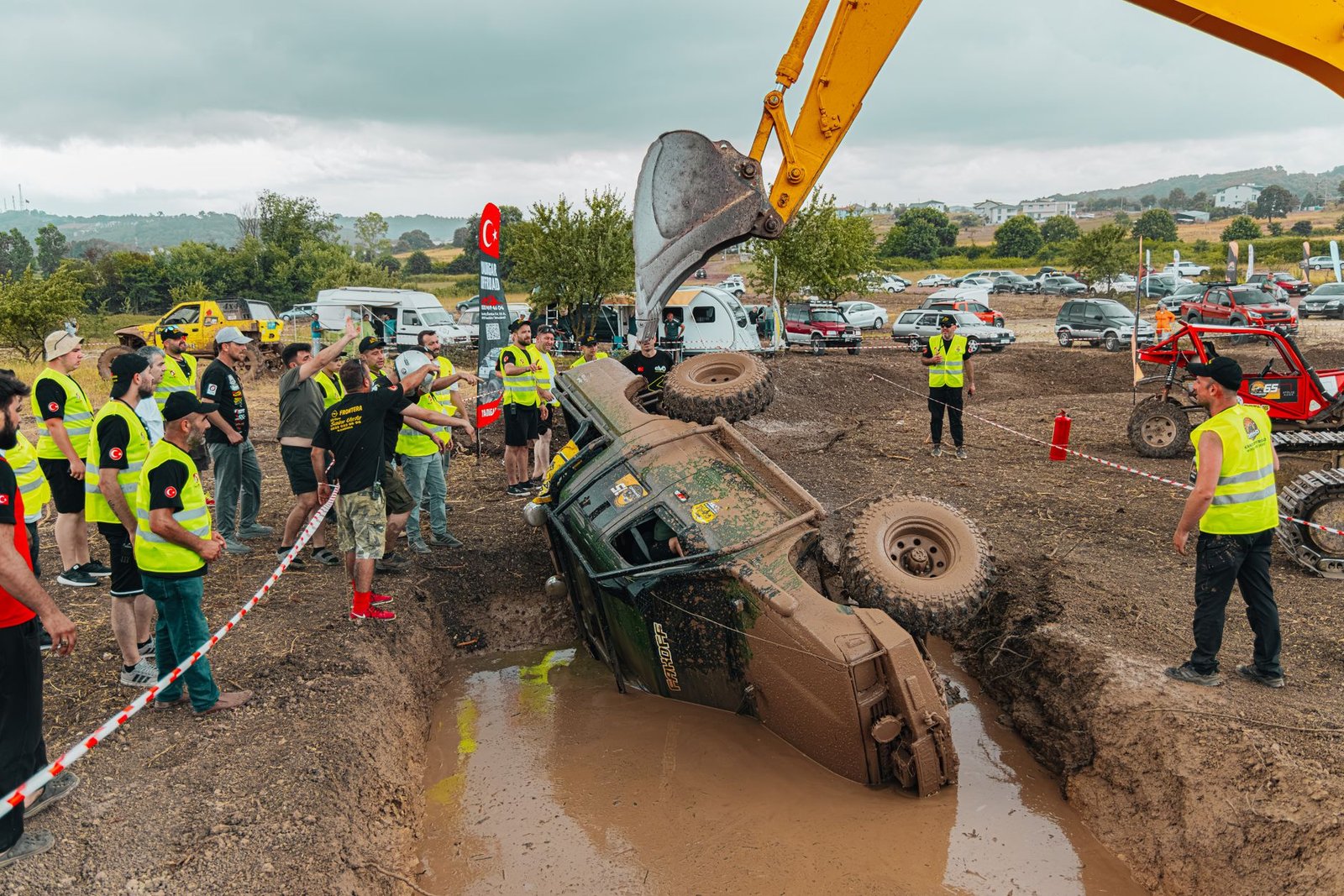
Essential Off-Road Recovery Gear for UAE 4×4 Drivers
No matter how capable your vehicle is, the desert and mountain terrain of the UAE will eventually find its limit. Soft sand that appeared firm from 20 metres back collapses under load. A wadi crossing that was knee-deep last week is now a metre deep after unseasonal rain in the Hajar catchment. A steep dune face that another driver crested easily is compacted differently on your approach. The difference between a ten-minute self-recovery and a three-hour wait for a passing convoy is entirely determined by the kit in the back of your vehicle – and by whether you know how to use it before the situation demands that knowledge.
The UAE presents specific recovery challenges that are not fully covered by generic off-road recovery advice written for Australian deserts or North American mountain trails. Sand here is fine and deep in ways that require proper kinetic recovery technique rather than brute towing force. Wadi rock terrain is sharp-edged basalt and limestone that can damage recovery gear as readily as it damages bodywork. Summer temperatures mean that physical recovery work in the dunes carries genuine heat stress risk, requiring speed and efficiency rather than leisurely problem-solving. The gear list and procedures in this guide reflect UAE conditions specifically, with supplier information relevant to Dubai, Abu Dhabi and Sharjah.
Recovery gear is organised here into three tiers: non-negotiables that should be in every UAE 4WD that leaves tarmac, strongly recommended items that significantly expand your recovery options, and expedition-specific equipment for multi-day remote trips beyond mobile phone range. Build your kit systematically from Tier 1 upward – there is no value in carrying a satellite communicator if you have not yet acquired a snatch strap.
Tier 1: Non-Negotiables – Never Leave Tarmac Without These
Kinetic Recovery Rope (Snatch Strap)
A 9-metre kinetic recovery rope with a minimum breaking strength (MBS) of 11,000–14,000 kg is the baseline vehicle-to-vehicle recovery tool. Unlike a static tow strap, a kinetic recovery rope is constructed from nylon that stretches 15–25% under load. This elasticity stores kinetic energy as the recovery vehicle takes up tension, then releases it in a smooth, progressive extraction force that pulls the stuck vehicle out without the shock-loading that a static strap creates.
The physics matter: a static strap transfers 100% of the shock when the recovery vehicle takes up slack – it jerks both vehicles simultaneously and can cause drivetrain damage, strap failure or recovery point failure under the sudden load. A kinetic rope absorbs the initial shock, stretches, and then releases a sustained pulling force that extracts the stuck vehicle progressively. This is why recovery professionals use kinetic ropes exclusively for snatch recoveries.
What to look for: MBS of 11,000 kg minimum for a standard full-size 4WD; 14,000 kg for heavily loaded or modified vehicles. Eye loops should be reinforced with abrasion protection. Avoid rope that is stiff, brittle or shows signs of UV degradation – kinetic rope stored in direct UAE sunlight degrades faster than rope stored in a bag in the vehicle. Replace every 3–5 years or after any recovery that loaded the rope significantly.
UAE suppliers: ARB (Al Quoz, Dubai; Abu Dhabi), TJM (Sharjah), 4WD Authority Gear Store, most 4WD accessory retailers in Dubai industrial areas. Price range: AED 180–450 depending on rating and brand.
Recovery Points and Shackles
All recovery connections must be made to purpose-built, chassis-bolted recovery points – a rated recovery hitch receiver, a factory-fitted recovery hook, or a recovery eye through-bolted to the chassis rail. Do not connect to tow balls, bumper tie-down loops, bumper corners, tow hooks not rated for kinetic loads, or any suspension component. These are not recovery points. A tow ball under kinetic snatch load can shear at the ball neck – the ball then becomes a steel projectile travelling at speed toward the stuck vehicle and anyone standing nearby.
Many factory bumpers on UAE market vehicles have marked recovery hooks – verify the rating plate if present, or consult the owner’s manual for the rated load. After-market steel bull bars from ARB, TJM and Ironman4x4 include rated recovery points as standard. Factory standard bumpers on some vehicles (notably some Patrol Y62 grades) have recovery loops rated only for towing, not kinetic snatch recovery – verify before use.
Shackles: Two shackles rated to at least 4.75 tonnes Working Load Limit (WLL) are required. For UAE off-road use, the strong recommendation is to use UHMWPE soft shackles in place of steel bow shackles wherever possible. A steel shackle that fails under kinetic load becomes a lethal projectile with enough mass to cause serious injury. A soft shackle that fails drops – it has no meaningful mass to injure bystanders and no energy to travel. For equivalent WLL ratings, a quality soft shackle is safer in every failure scenario. Weight saving and compactness are additional advantages.
If using steel shackles: seat the pin correctly and mouse it against unscrewing with a zip tie or wire through the pin hole. A steel shackle that spins its pin under a kinetic load can unscrew itself, releasing the connection at full tension. This is a known failure mode, not a remote possibility.
Recovery Tracks (Sand Plates)
MaxTrax MKII, Tred Pro or ARB Recovery Boards – two boards minimum; four boards significantly expand your recovery options. Sand tracks provide a rigid surface under spinning wheels. The tyre bites the track’s moulded traction teeth and drives forward rather than digging deeper. On compacted or semi-hard sand, the tracks also spread load under the board and prevent the board itself from sinking during the extraction.
Recovery tracks are the most frequently used piece of recovery equipment on UAE sand by a significant margin. Most UAE sand stucks are light – the vehicle has dug in 10–15 cm and lost traction rather than becoming deeply buried. Two boards placed under the drive wheels resolve the majority of these situations without requiring a second vehicle. For this reason, they justify Tier 1 status even though they are a single-vehicle tool.
Technique matters: Dig out excess sand from in front of the buried wheel before placing the tracks. The track needs to sit on relatively firm sand, not in a bowl of soft material. Place the track with the arrow pointing in the direction of travel, and ensure the leading edge is under the tyre contact patch. Accelerate smoothly – wheel spin will fling the board out from under the tyre at speed.
Storage: MaxTrax MKII boards fit flat in the boot of most full-size 4WDs or mount externally on roof racks or spare-wheel carriers. External mounting is fine but accept that UV exposure and road debris will reduce cosmetic condition over time – the structural integrity of quality boards is not affected by UAE sun exposure within a normal ownership period.
Tier 2: Strongly Recommended
| Item | Purpose | Notes |
|---|---|---|
| Hi-lift jack plus base plate | Lifting buried wheels for track placement; also useful for winch anchor | Base plate essential on sand – without it the jack foot sinks. Jack rated to 3 tonnes minimum |
| Shovel (D-handled) | Digging out buried wheels, diff and front fascia | D-handle for clearance when working under low bumpers. Folding shovels are compact but slow – a full-length shovel is better for deep stucks |
| Compressor (72+ LPM) | Re-inflation after sand deflation | ARB CKMTA12 or Viair 400P-RV. Essential – not optional |
| Tyre deflator set | Fast, controlled deflation to target pressure | Staun automatic or quality manual with gauge |
| Tree saver strap | Anchor to a tree without damaging bark; wider load distribution | Rarely needed on UAE sand; valuable on Hajar and Omani mountain trails with vegetation |
| Snatch block | Doubles the effective pull of a winch; redirects pull direction | Rated for kinetic load – not a static pulley block. Useful if running a winch |
| Jumper cables or jump starter | Battery recovery after accessory use drains the battery | A lithium jump starter is more compact and reliable than battery-to-battery cables in UAE heat |
Hi-Lift Jack: Correct and Safe Use
The hi-lift jack is a powerful recovery tool that causes injuries every season through incorrect use. Key points: never use it without a base plate on sand – the foot sinks immediately and the jack tips. Use the farm jack adapter to attach to standard tow points rather than jacking under a bumper corner. Keep hands clear of the handle path – a slipped handle on a loaded jack delivers a serious impact. The hi-lift is a last resort for heavily buried vehicles; sand tracks and a kinetic rope resolve most UAE sand stucks without it.
Tier 3: Remote and Multi-Day Expeditions
| Item | Purpose |
|---|---|
| Garmin inReach Mini 2 | Satellite two-way communication and SOS beyond mobile coverage – essential for Rub Al Khali approaches, remote Hajar trails |
| 12V portable fridge | Food and medication preservation; also maintains cold water supply in summer heat – critical for heat safety on multi-day runs |
| Additional 20L water jerry cans | Beyond the standard water carry; UAE remote desert carries minimum 10L per person per day for summer conditions |
| Solar panel or portable generator | Device charging and compressor power on multi-night camps where the vehicle is not running continuously |
| 2 kg ABC fire extinguisher | Vehicle fire risk post-wadi when hot exhaust contacts dry vegetation; also electrical fire risk on modified vehicles |
| First aid kit (comprehensive) | Desert-rated kit with burn treatment, blister treatment, rehydration sachets and full wound care |
Safe Recovery Procedure
- Assess before attempting. A vehicle buried to the floor pan needs to be dug out first. Attempting a kinetic pull on a deeply embedded vehicle can damage recovery points, the rope, or both vehicles.
- Rig only to rated recovery points. Verify that both vehicles’ attachment points are secure and correctly rated before connecting the rope.
- Use soft shackles. If using steel shackles, mouse the pins.
- Place a dampener (a bag, floor mat or purpose-made weight) over the mid-point of the recovery rope. If the rope or shackle fails, the dampener reduces the projectile distance of any component.
- Leave 1–2 metres of slack in the kinetic rope between the two vehicles. The rope needs to be able to stretch before it arrests the recovery vehicle’s momentum.
- Clear all bystanders to the side – not in front of either vehicle, not behind either vehicle. Everyone stands at 90 degrees to the recovery line at a distance of at least 1.5 times the rope length.
- The recovery vehicle accelerates smoothly to take up the slack, then continues at a steady pace. The rope stretches, absorbs energy and releases it in a smooth extraction force.
- Stop and inspect the rope after every use. Sand embedded in kinetic rope fibres abrades them internally, reducing strength over time without visible external damage.
Communications on the Trail
A PMR446 handheld radio for convoy communication is essential on any multi-vehicle run – mobile signal is unreliable on UAE mountain trails and absent in dune interiors. PMR446 (446 MHz, 0.5W max power) is the only licence-free two-way radio band legally usable in the UAE, and sets must be TDRA type-approved; it is a different band and standard from Australia’s 477 MHz UHF CB, so those radios are not legal for use here. A set of four quality UHF handsets covers a typical convoy of four vehicles; keep one handset at the front of the convoy and one at the rear.
For remote expeditions beyond mobile range, the Garmin inReach Mini 2 provides two-way satellite messaging and GPS position sharing via the Iridium network – full global coverage with no dead spots. The SOS function connects directly to the GEOS International Emergency Response Centre, which then contacts UAE emergency services. In the UAE: 999 for Dubai/Northern Emirates Police and Desert Rescue; 998 for National Ambulance. File a trip plan with a trusted contact before any remote expedition and agree on a check-in schedule.
Common Mistakes
- Connecting to a tow ball for a kinetic snatch. Tow balls are not rated for kinetic snatch loads. Failure releases the ball at speed. Always use rated recovery points.
- Skipping the rope dampener. A snatch strap failure without a dampener sends shackles and rope ends at speed toward both vehicles and any bystanders. This practice costs nothing and prevents serious injuries.
- Using a static tow strap instead of a kinetic rope. Static straps transmit full shock load. On sand, shock loads damage drivetrain components and recovery points. Use only kinetic ropes for snatch recoveries.
- Not inspecting the rope after recovery. Sand ingress reduces rope strength progressively. A rope that has been used three times on fine UAE sand without inspection may be significantly weaker than its rating suggests.
- Attempting a pull without digging out first. A vehicle buried past its axles must be dug out before any pull. A kinetic rope cannot extract a vehicle with 500 kg of sand pressing on its undercarriage.
- Leaving bystanders behind either vehicle. All bystanders must be clear to the side at a safe distance before any recovery attempt begins.
FAQ
How do I know which recovery points are safe to use on my vehicle?
Factory-fitted recovery hooks and eyes are documented in the owner’s manual with their rated capacity. After-market bull bars from reputable manufacturers (ARB, TJM, Ironman4x4, Raptor) include rated recovery points – check the manufacturer’s documentation for the WLL. If in doubt, have a 4WD specialist inspect the points before any recovery use.
Is a winch necessary for UAE off-road driving?
A winch is not in Tier 1 or Tier 2 for most UAE use. On sand, a kinetic rope and recovery tracks resolve the vast majority of stucks. Winches are more valuable in heavily wooded terrain (Oman mountains) where anchor points are available. On UAE dune sand, there are rarely adequate anchor points for a winch, and the kinetic recovery method is faster and simpler for typical sand stucks. Consider a winch for serious remote expedition builds, not as a starting point for a recovery kit.
What MBS (minimum breaking strength) should my snatch strap be rated to?
For a standard full-size 4WD (Land Cruiser, Patrol, Prado) on UAE sand, a minimum MBS of 11,000 kg is appropriate. For heavily modified vehicles or those carrying significant expedition loads that push total weight above 3,500 kg, a 14,000 kg MBS strap provides appropriate safety margin.
Can I use the same soft shackle for all my recovery connections?
Yes – quality UHMWPE soft shackles rated at 4.75 tonnes WLL or above are suitable for all kinetic recovery connections on standard 4WDs. Carry two as minimum – one for each end of the recovery rope.
How often should I replace my recovery rope?
Every 3–5 years for regularly used ropes, or sooner if visible damage, stiffness or UV degradation is apparent. Any rope that has been used in a heavy-load recovery – where it was stretched close to its limit – should be inspected carefully before reuse and replaced if there is any doubt. In UAE conditions, UV exposure accelerates nylon degradation; store ropes in bags out of direct sunlight when not in use.
For correct tyre pressures before and during recovery situations, see Tyre Pressure Off-Road: The Complete Guide.